 My friends are still all worked up about Eva Peron, and I try to explain that the mistreatment and moving around of her body is unusual but by no means anomalous in this country (Argentina) and particularly in this cemetery (Recoleta Cemetery, Buenos Aires). There is a real obsession with opening graves, removing bodies, relocating them, kidnapping or hiding them, which, I think, is a national characteristic. My friends are horrified when I say that, but there’s really no point in denying it.
I like cemeteries. No, I love cemeteries. There have been times in my life I’ve been obsessed with cemeteries. I usually try to find an excuse to put a cemetery scene in my books – in How Bright Are All Things Here and Verity Sparks and the Scarlet Hand, they’re pivotal – and in the mid-1980s I wrote a prize-winning short story, The Lost Children inspired not just by the famous Lost Children memorial in Daylesford cemetery but by all the little, half-forgotten graveyards I’ve explored. You can read intertwined family histories, find mining accidents, drownings, fires and other tragedies, be reminded of the high child mortality of the 19th century, and discover some extraordinary names – Saddington Plush, one of the main characters in the Verity Sparks series, I lifted from a stone in the Angaston cemetery in the Barossa. I haven’t yet found a use for Sideney (was it meant to be Sidonie?) Dumayne, but I’ve saved it up for later.
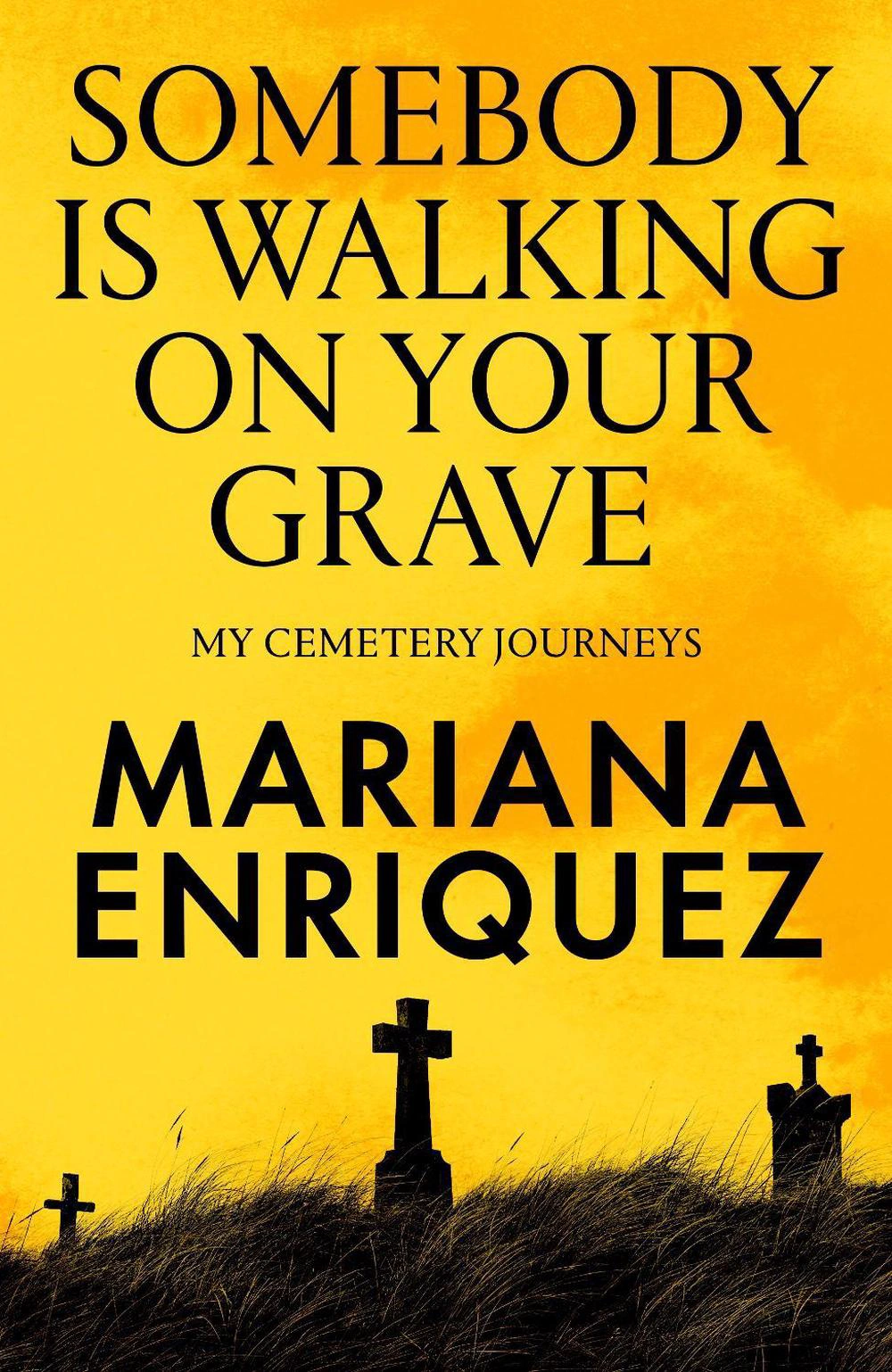
So. These are my credentials. It stands to reason that Someone Is Walking On Your Grave: My Cemetery Journeys is right up my alley. Enriquez is an Argentinian journalist, novelist and short-story writer. She’s followed her passion for music and cemeteries around the world, following her favourite bands and/or visiting legendary graveyards in Italy, Spain, France, Chile, Argentina, Mexico, Peru, Germany, the USA, Cuba, the UK and even Rottnest Island, WA. It’s both amazing and fabulous, in the true sense of the words, full of ghost stories and legends and extraordinary real-life historical details. Like the totally bonkers story of what happened to Eva Peron’s corpse. I can’t do justice to it; you’ll have to read it yourself.
I loved the way she weaves these complex narratives out of monumental masonry, inscriptions and statues. The book is a hybrid of journalism, travel writing, history, memoir: she’s a generous writer, with an eye for the macabre and the poignant, alert to politics and injustice and sheer absurdity. The story of the drowned graveyard! I’ll give you a precis; when the cemetery of the small town of Villa Epecuen in Buenos Aires province was flooded, the local authorities didn’t like the look of tall monuments and the tops of mausoleums sticking up above the water. So they had workers in boats go around and smash them up. Of course, the water receded. And left behind were all these ravaged, truncated monuments, coated in salt from the floodwater.
Enriquez and her Australian husband have recently re-located to Tasmania, and I expect she will be able to find a story or two on her travels around the island.
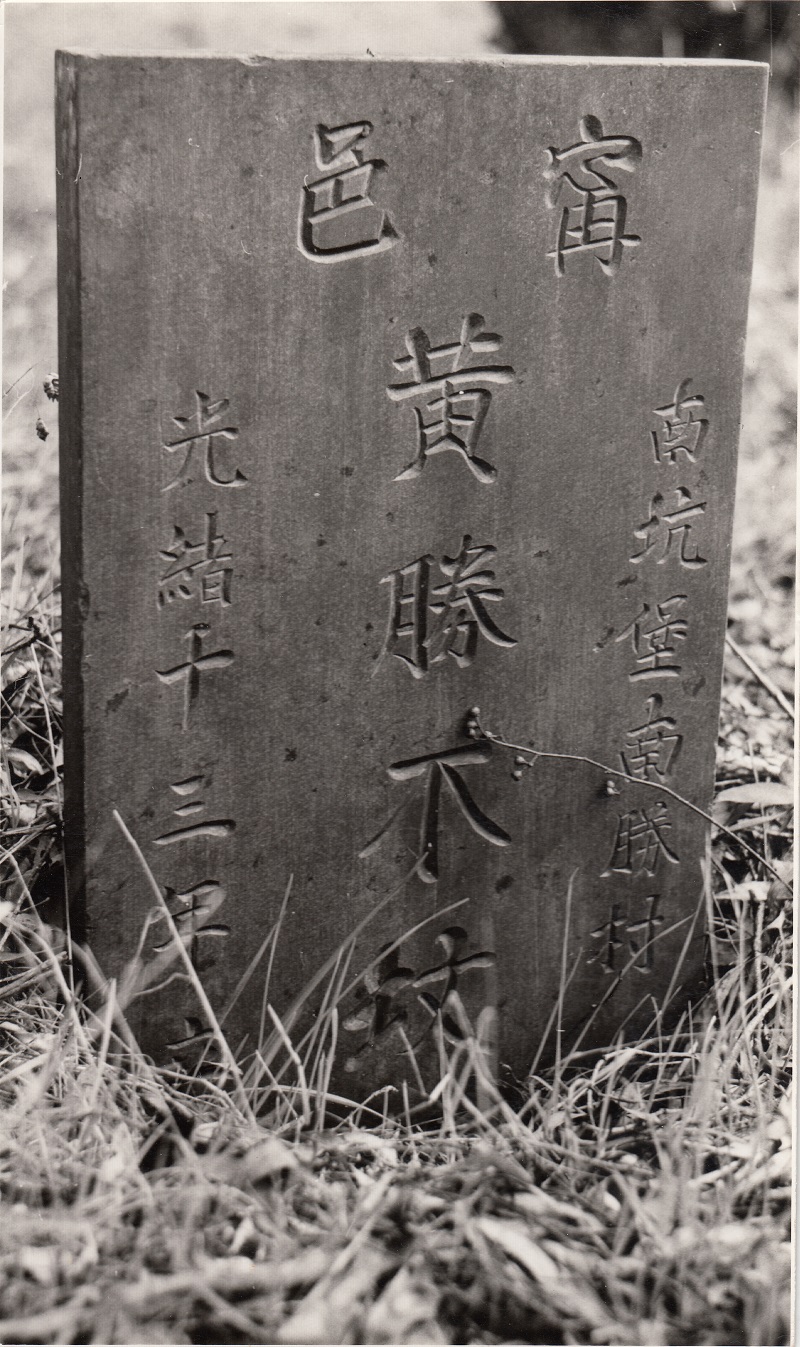 Grave in the Chinese Section of the Castlemaine Cemetery. Photo taken circa 1967
Oh, wow, this sounds amazing! I love cemeteries, too — as a student at Melbourne Uni, we used to sneak between the railings and wander around the Melbourne General Cemetery at night, or have picnics under the trees. Comparing notes on ancestors buried there, my best friend and I discovered we were related! One year I lived in a share house in North Carlton and rode my bike every day to uni through the cemetery and got to know all the graves along the paths. There is something deliciously sad and melancholy and peaceful about old cemeteries, and yes, a wonderful source for character names.