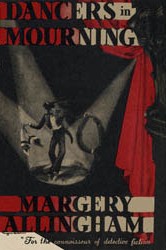
 Another Allingham, Dancers in Mourning.
Singers and dancers are rehearsing a new show at the country house of the star, his wife and their little daughter. Larger-than-life personalities and egos, tangled relationships and jealousies, lead to pranks that turn to persecution then to murder. The pleasures include Campion in love and finally becoming human, and Magersfontein Lugg teaching the lonely little girl how to cheat at cards, pick locks and properly clean crystal glasses.
Twisty and surprising and perfectly satisfying.
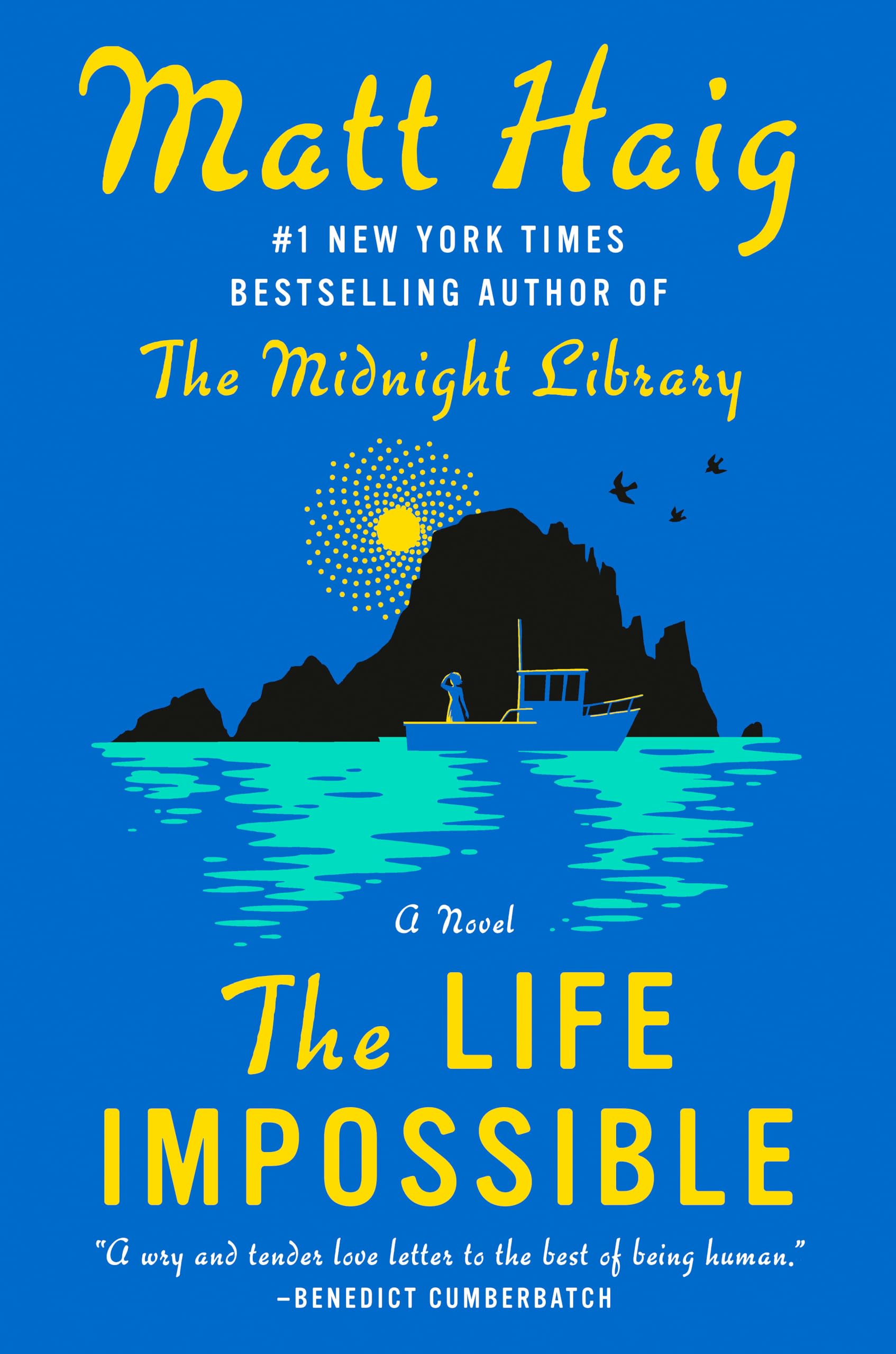 A book group title, The Life Impossible by Matt Haig.
Grace Winters, recently widowed and with the tragic childhood death of her son a constant shadow in her life, is bequeathed a house on the island of Ibiza by a long-ago teaching colleague. As soon as she arrives, she’s immersed in new possibilities and is (at times unwillingly) transformed. We decided that you could describe this as ‘magic realism’ and I enjoyed most of it, but…(spoiler ahead)…when I learned that the supernatural undersea phenomenon called la Presencia came from another galaxy, I balked. However, the gift of this book to me was the sheer delight of a completely un-cynical narrative about discovering magic, mystery and awe in the world around us. And my favourite bit was where Grace, angered by the distress of lobsters in a tank, breaks the glass with the power of her mind – and dozens of crustaceans go scrambling through the restaurant full of diners, out of the doors and to the sea.
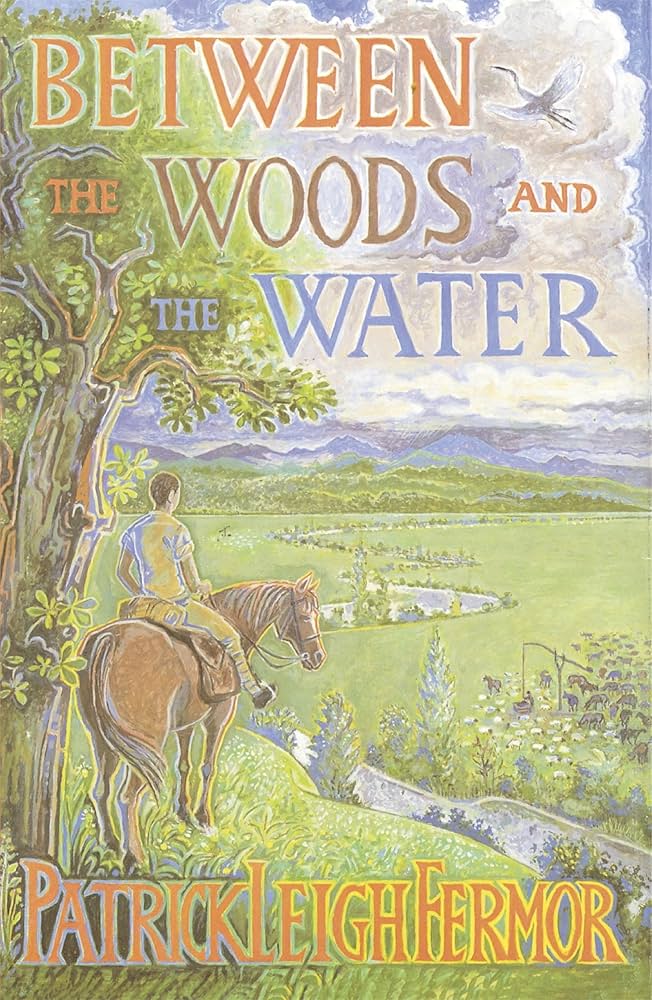 Another book group title, From the Woods to the Water: On Foot to Constantinople:the Middle Danube to the Iron Gates, by Patrick Leigh Fermor.
I think I might have read it before – I know I read the first volume, A Time of Gifts, a few years ago. It was written in 1986, more than 40 years after, at just 18, he set out on his odyssey. What a time he had! Relying on diaries and letters and his memory, it’s a journey through time and space. In Hungary, Rumania and Transylvania – at that time, remote and little known – he visits castles, monasteries, cathedrals, sophisticated cities and towns; and villages, gypsy encampments, sheep herding and woodcutting communities isolated by mountain passes, forests, chasms and wild rivers, and the great plains of Hungary. He’s helped on his way by aristocrats with their estates and servants, their network of relatives and friends and by chance-met villagers, gypsies, wanderers and shepherds. And all through these recollected travels, insatiably curious, he reflects on geography, religion, politics, architecture and history of the region.
It was 1933-4 – as he writes, it was a lost world, soon to be swept away forever by the storm of events that was gathering in Europe. He mourned that many of the families and individuals who meant so much to him were never to be heard of again. And, I thought, all those house servants, drivers, gypsy musicians, mountain shepherds, village girls, farm labourers, shopkeepers – Muslim and Catholic and Protestant and Orthodox and other sects as well…
You could pick Fermor’s nostalgia to pieces if you were so minded – privilege! – but I found it a beautiful book and loved being immersed in – actually, getting drunk on – his lush flow of words. This, at random:
Beyond the mountains to the north and eat, clouds had been arranging themselves in a disturbing array, flocculent and still at first, then fidgety with summer lightning. The electricity dancing about among these heaps of vapour turned them blue-green and silver and mauve and in a shudder and a split second they would become transparent or bulbous or as thin as stage wings: scenic effects like magnesium, as though an atmospheric clown or a harlequin were loose in the hills.
I am wondering what my book group buddies are going to make of it.