
More Allingham, more hot-weather reading pleasure.
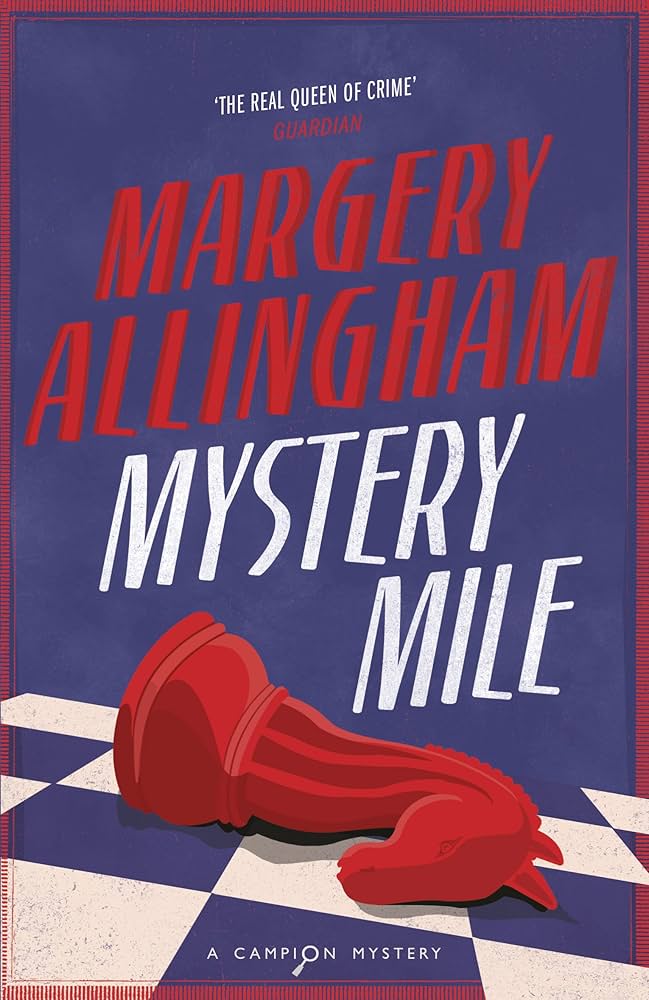 Mystery Mile (1930) is the second book featuring Albert Campion. In it we see an American judge arrive in England to escape repeated attempts on his life. Campion finds a safe haven for him and his two adult children with old friends Biddy and Giles Paget in their estate near Mystery Mile, a village on the Suffolk coast. It turns out not to be so safe, after all. Which is not really a surprise, is it?
The cast of characters include a crew of eccentric local country folk, a saintly vicar, a boring art expert, a sinister criminal mastermind and his gang, plus Campion, Lugg and group of lively young people. The action rockets between rural Suffolk and London; there are fights, escapes, murders and abductions. Campion, ably assisted by valet Magersfontein Lugg, reveals hidden depths beneath his silly patter and habitually vacuous expression. He’s a dark horse, that one.
I also read Look to the Lady (1931), The Case of the Late Pig (1937) and The China Governess (1962).
The first two are adventurous romps, with a blend of detection, suspense and giddy, often black, humour that I’m learning is classic Allingham. They were both high-spirited and fast-moving, veering off in unexpected and sometimes pretty weird directions, with Campion front and centre in the plot. The China Governess (1962) is a very different kind of book, set in a very different kind of Britain.
It was written near the end of Allingham’s 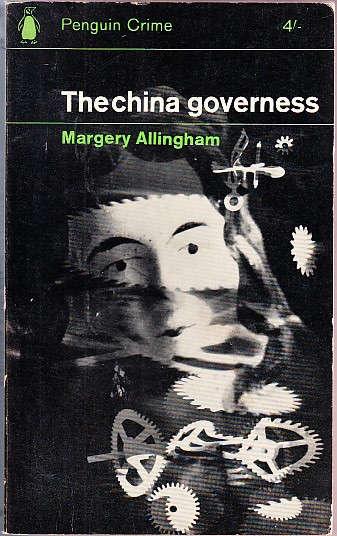 career. I wonder if it is typical of her late work, because it’s very different to the earlier books. It’s slow-moving and dark rather than madcap, pacy and enjoyably weird and definitely not a romp.
It follows Tim, the adopted child of an unpleasantly condescending and emotionally repressed family as he searches for the truth about his parentage. A kind of Who Do You Think You Are in post-war Britain, set among housing developments and seedy suburbs as well as the more familiar ‘big house’. Allingham’s plot provides a constant interplay between past and present. New homes are built on top of old slums; Tim’s adoptive family deal in antiques; a Victorian murder and a WWII tragedy cast long shadows; Allingham explores issues of heredity v upbringing. The easily offended 2026 reader might need a warning, but it is of its time. (As an aside, my first job in 1977, with intellectually handicapped adults, was overseen by Mental Retardation Services).
It’s a dense, unsettling drama, with Campion a minor player, and though I enjoyed it very much, if you are looking for ‘classic crime’, this is not it.