 The courtyard led through an archway onto Lenin Avenue, one of the city’s busiest streets. Ancient tin buses wheezed past carrying workers to outlying factories. Trams and trolley buses trundled up and down. Heavy black Russian tourers threaded their way through the traffic, the drivers’ hands on the horn. Like all the avenues and parks and squares here, Lenin Avenue was generously planned. Beneath the plane trees, on the wide pavements, old women with shawls wound across their mouths sold carnations and sunflower seeds in newspaper cones. Shops like cupboards carved into the gracious tufa facades sold newspapers and cigarettes. The signs on street corners, above doorways, on bus fronts, Cyrillic or Armenian, were indecipherable to Edith. She was illiterate here. The street ran on beyond the haze of petrol fumes to the city’s gaunt surrounding hills.
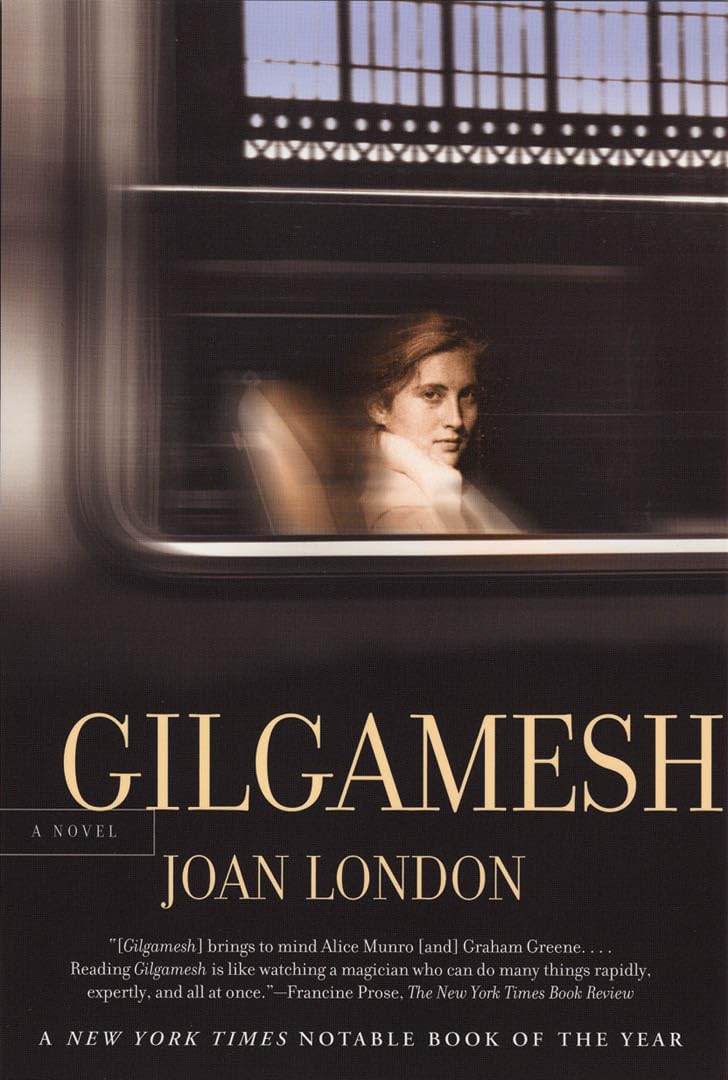
I would never have picked Gilgamesh from the library shelves, but a member of my Wine and Cheese Book Group did, and I loved it. A fairy-tale, an epic, a coming-of-age story, an adventure, a drama of love and war, even a spy thriller – it has elements of all these. I couldn’t put it down.
The beginning, a sort of prologue, is set in 1918, at the end of the First World War. Australian soldier Frank marries Englishwoman Ada and takes her with him to a soldier settler block in Nanderup, a small town in Western Australia. They are both unsuited to the life and the farm fails to prosper. With their daughters Frances and Edith, they live a hard, isolated and impoverished life.
1937, Frank has died, and Ada and her daughters are still living on the farm. Seventeen-year-old Edith brings some money into the house by waiting on tables and cleaning at a nearby guest house. Suddenly, exotic visitors arrive. They are Leopold, Ada’s half-Russian, half-English nephew, an archaeologist; and Aram, once Leopold’s driver and now his friend. Aram talks to Edith about his tragic homeland of Armenia; Leopold tells the story of the Mesopotamian king Gilgamesh and his friend, the wild man Enkidu. For Edith they bring with them fun, friendship, affection, news, stories, ideas, histories and myths, intimations of a much wider world than Nanderup.
And then, two years late, in 1939 and on the cusp of another war, Edith and her little son Jim set out on their own adventure, by ship and train and overland, seeking Aram in Armenia.
No spoilers after this; read it yourself. Gilgamesh is beautifully written, the language poetic but at the same time to the point. I loved every word. Every character, too; the section set in Soviet-controlled Armenia, where Edith becomes part of the ill-assorted household of the trader Hagop, could have been a novel in itself. The action moves across the map with intense, evocative descriptions: London, tiny Nanderup in the Australian bush, Istanbul, Armenia, the Middle East in wartime, and then back home to Nanderup. As the story moves in a circle, you can feel Edith learn, survive, become strong, become herself. She’s the heroine of her own epic.
The distant wireless roar of the ocean, the cries of the cockatoos released in the wind, came straight from childhood. Everything Edith saw moved her, the slow clouds, the olive-green headlands, the great bowl of the sea. She knew everything that met her eye in every direction. The space and light could make her dizzy with happiness. Whatever the terrors and mysteries of childhood, she thought, she must have known happiness here.