 In meandering long hours spent with friends I often have the welcome feeling of having drunk to my heart’s content from a deep well. I associate such time with the replenishment that is possible in leisure, without effort or agenda. Reading Milner helped me recognise an interior experience, which shares something with the quality of such time spent with friends. I feel it when I can let my thoughts and feelings gather instead of trying to dig them up to subject them to the harsh glare of investigation, or chasing after them to know exactly what they were. What surfaces out of such a gathering is sometimes unexpected, at other times mundane. An intention can take shape, or I may just feel a bit more rested than before. In the privacy of one’s mind, as well as in the company of others, there may be some things that lend themselves to scrutiny and purpose, but there are others best encountered at leisure. It isn’t possible to reach them by means of expedition or pursuit, much better to issue an invitation, extend a welcome, and let the guests gather.
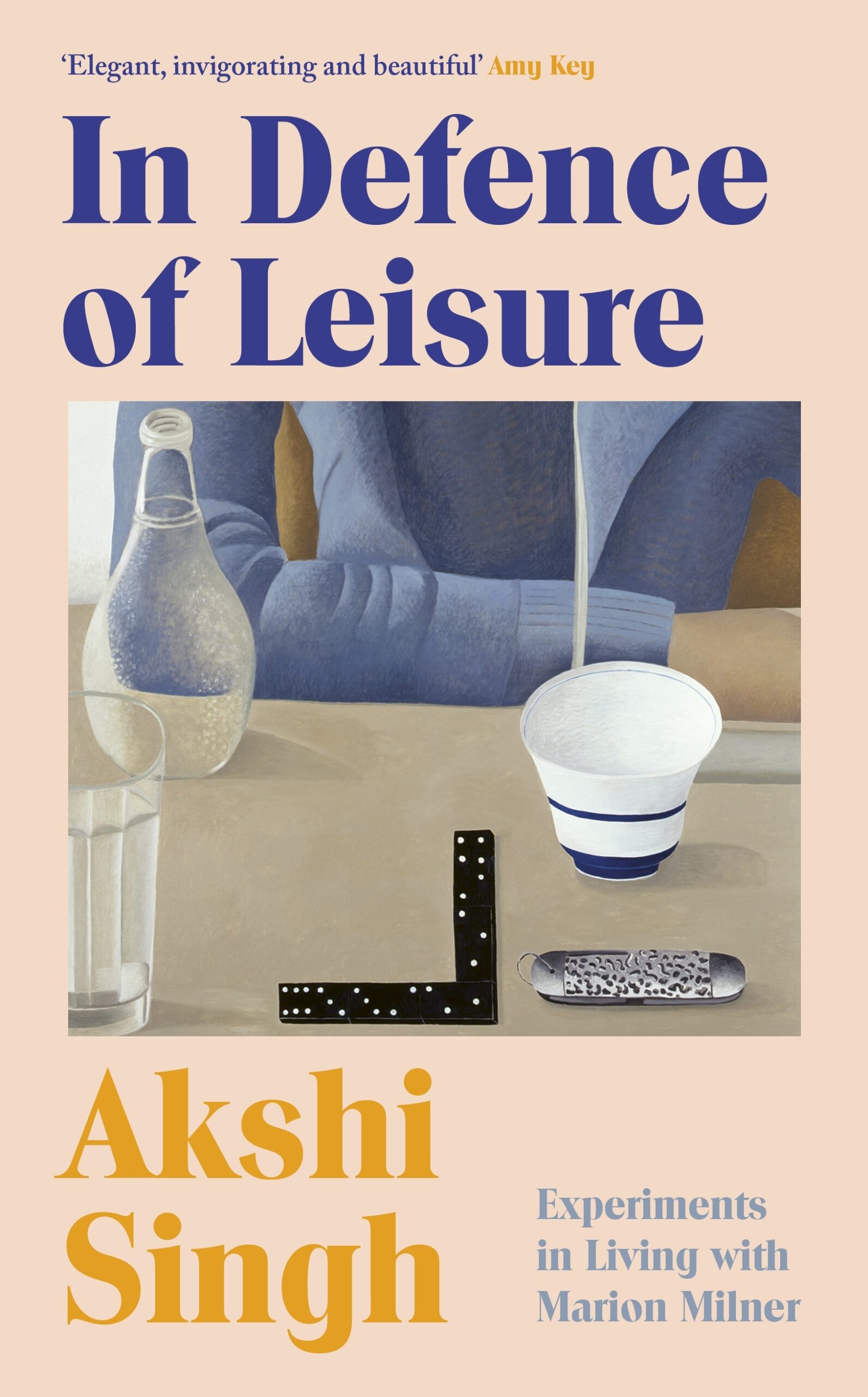
Akshi Singh, born in Rajasthan and now living and working in London and Glasgow, has written this book as a response to and conversation with another book, another writer. Singh appears to be in her late twenties or early thirties; the other writer, Marion Milner, was born in 1900 and died in 1998. Milner was a British psychoanalyst, surprisingly (or not, given that she was a woman ) forgotten, even though she was widely published in her day.
I first encountered Marion Milner in 1988, through a surprise present from my dad. He was always on the alert for books he thought would interest me. Or perhaps, help me along my way to being happy and creative and fully alive. The book was A Life of One’s Own, a Virago reprint of the 1934 original. The author began with the realisation that she didn’t really like her life, and asking herself what she could do about it. But unlike today’s lifemaxxing, optimising self help gurus, she took a gentle and non-prescriptive approach, instead simply asking herself, how do I want to spend my free time? What do I really like to do?
It seemed to me an unusual question…of course you know what you like to do. Or do you? She ran an experiment on herself, noticing, paying attention, without a plan or agenda or purpose. Creating, painting, travelling, resting, playing, daydreaming, drifting…she became alert to ways of being that can be unexpectedly joyous and creative. After reading it, I remember I got curious about myself and discovered the weirdest paradox; when I’ve got genuinely free time, I often feel panicky and out of sorts, and can rush to fill it with something, anything, rather than sit with myself in emptiness and feel my way to what I want to do.
I’m so happy to see Milner’s writing, in this memoir, celebrated, re-examined and shown to be relevant and useful in 2026. Singh writes about herself candidly in a way that Milner never did (she was always elliptical and guarded about her private life and relationships). She talks about being a young woman from a traditional Indian family, about family ties and expectations, about personal losses and grief, struggles with relationships and sexuality, with sub-standard housing, Covid, domestic chores and the Byzantine UK immigration procedures – but with Milner as a companion. Singh doesn’t shy away from the issue of privilege; Milner stresses the importance of the creative life, but Singh is alert to the fact that many woman are overwhelmed by the stresses of sexism, racism and poverty.
I’m going to re-read the Milner books I own – A Life of One’s Own, An Experiment in Leisure and Eternity’s Sunrise – and then re-read In Defence of Leisure.
I haven’t encountered Marion Milner but I’m intrigued, this sounds like just the kind of book I’d love — but I suspect she’s going to be hard to track down 🙁