
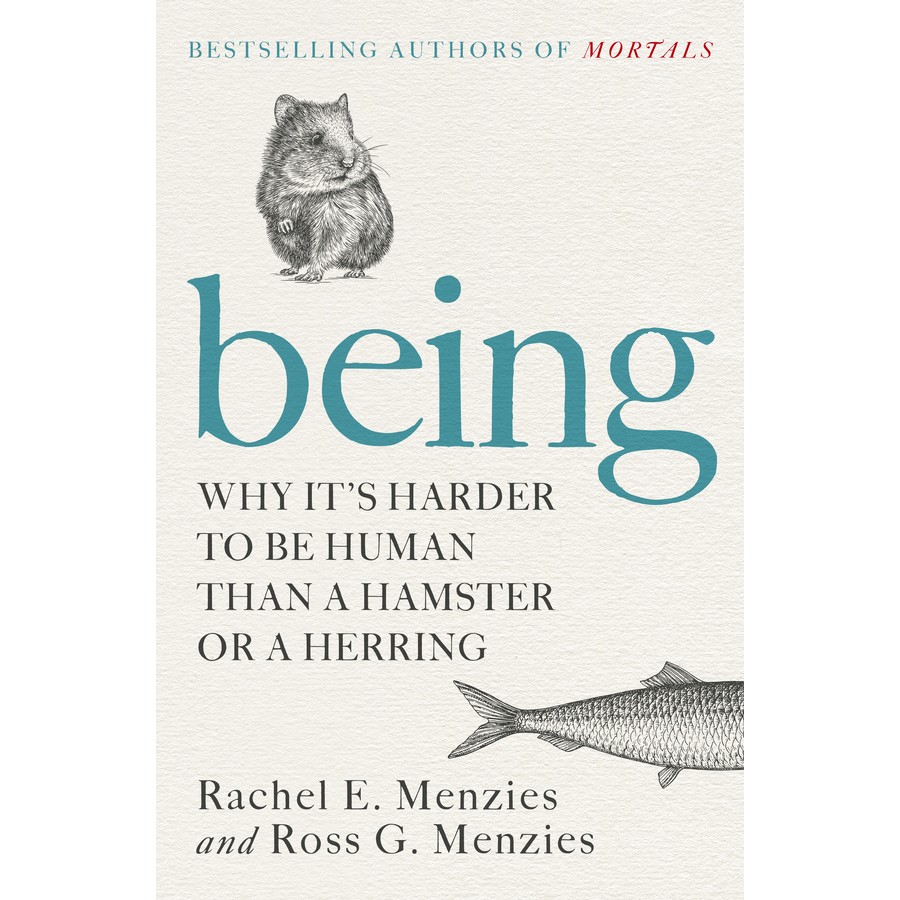
 Do I really need to read more popular psychology books? Apparently I do, because after seeing this interview in the Guardian, I went out and bought Being: Why It’s Harder to be Human than a Hamster or a Herring. Rachel E, Menzies and Ross G. Menzies, daughter and father, have written a useful addition to my shelf. Two sections in particular stood out.
The Inner Voice. Oh God. Mine is not always horrid, but there are times when it (or is it a she?) just does not shut up. On and on and on and on…commentating, narrating, scripting, stage directing, nagging. If I can divert it, and get it telling stories – especially the story I am working on – it can be very useful. But tiring. The Menzies believe that it’s essential we change our relationship with the inner voice. They say we need to ‘react to the inner voice as if it were a separate entity to ourselves. Only then can we objectively see the damage that has been done.’
Only then can we judge the effects of the voice dispassionately, in the way that we would judge the same sentences if they were coming from another source, like a bully in the schoolyard. By adulthood, would we really be listening to another person if they’d called us fat and ugly through our youth, told us our mother had forgotten us every day at school pick-up and made up monsters in the dark?
They also note that the inner voice ‘seems to magnify our sense of personal significance’. We can become overwhelmed by our own private world, and develop an inner realm – a little like a game – where only we are truly special, the main players, and other people are secondary characters. Which is isolating, and lonely.
The other section that I found interesting – worthy of much more thought, and perhaps even a game changer – was in the chapter called The Illusion of Freedom. It concerned anger. They write that humans get angry with each other because of ‘should-based appraisals’. She should have known better, he should have phoned back, they should not be racists or bad drivers or park in the disabled spot, etc etc etc. They say that ‘if you believe they should have acted differently, presumably you believe they could have acted differently.’
Put plainly, if we accept that people are just playing out their hardware and software as they encounter each moment, given their current levels of blood sugar, hunger, fatigue, relevant hormones and other distributed causes across their cultural and evolutionary history, then anger makes no sense. Getting angry at other people is no more rational than getting angry at any other machine.
This is not a heavy book, but it’s definitely meaty; full of ideas to chew over. I don’t want to be a hamster or a herring, but yes, at times being human is hard and unrelenting work.