 The skinned bodies are lining up along the bench as Verla finishes with them, adding one more to the row. Pink, fairly gleaming in the light from the speckled window. Through the window she can see Yolanda coming up from the paddock, a single rabbit dangling from each hand.
Every now and then Verla imagines her old self coming across this scene, across her present self: her bony ribs, her hair matted, her coated teeth. The filthy greasy calico dress, something out of the nineteenth century. The bucket of rabbit heads beside her: staring eyes, stiff ears, the gory ragged hem of their necks. Her easy familiarity with all these things, as if she was born to this handling of little bodies like slippery new babies, flipping and turning the creatures as casually as the folding of pillowslips. The nimble plucking out of heart and liver and guts.
My library book group enjoyed Charlotte Wood’s The Weekend. I wonder what they will make of this? It’s a different kind of all-girl nightmare to Bad Behaviour. I have also been working my way through Virginia Hauseggers’s Unfinished Revolution: The Feminist Fightback. And oh, what’s that in the news? A possible world war being ignited by a group of narcissistic madmen? Perhaps it’s no surprise that I am kind of over the patriarchy.
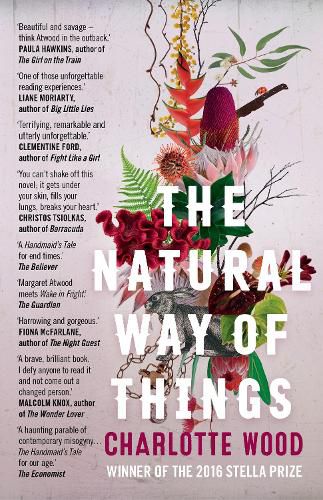
I had actually read The Natural Way of Things before, around the time it won the inaugural Stella prize, so there were no surprises in the plot. A disparate group of women find themselves imprisoned on a remote bush property. They have all been involved in some kind of sexual scandal with members of the military, educational, religious, political, sporting and business establishments. Powerful men. Let’s use the P-word; the patriarchy. It is expedient for the women to disappear. Not only that, but to be taught a lesson. Taught their place.
Wood describes the day-to-day degradation and cruelty of their captivity in gut-wrenching detail. None of the women are immediate rebels; half-starved, disoriented, brutalised, they submit to their creepy captors. Wood excels in slowly building, detail by telling detail, a gut-wrenching picture of the daily degradation and cruelty meted out to them. I found the way the two main protagonists – political staffer Verla and footballer’s girlfriend Yolanda – evolved into rebels was complex, believable and at times startlingly poetic. That was a surprise; the arresting beauty of the writing was something I had forgotten.
She looked back across the plain. She had climbed the hill in the gloom but now the sky was lightening she could see the grass was pinwheeled with small frosted cobwebs: handspans of silver gauze suspended between grass blades. Hundreds, perhaps thousands of them, all across the paddock below her. She stood as the sky glowed, and more and more cobweb stars became visible. A Milky Way across the flat.
When I finished the book, I was exhausted and had to read a 1930’s crime novel for relief. (And that is another story, My God, there are some weird books in the Golden Age canon!) I’ll get back to Australian feminism when I’ve recovered.
I must confess I didn’t really like this book. Maybe it was just too bleak for where I was at the time, but I haven’t felt tempted to go back to it.
Yes, it was bleak and very disturbing. I don’t think there’s any need to go back to it, Kate!