
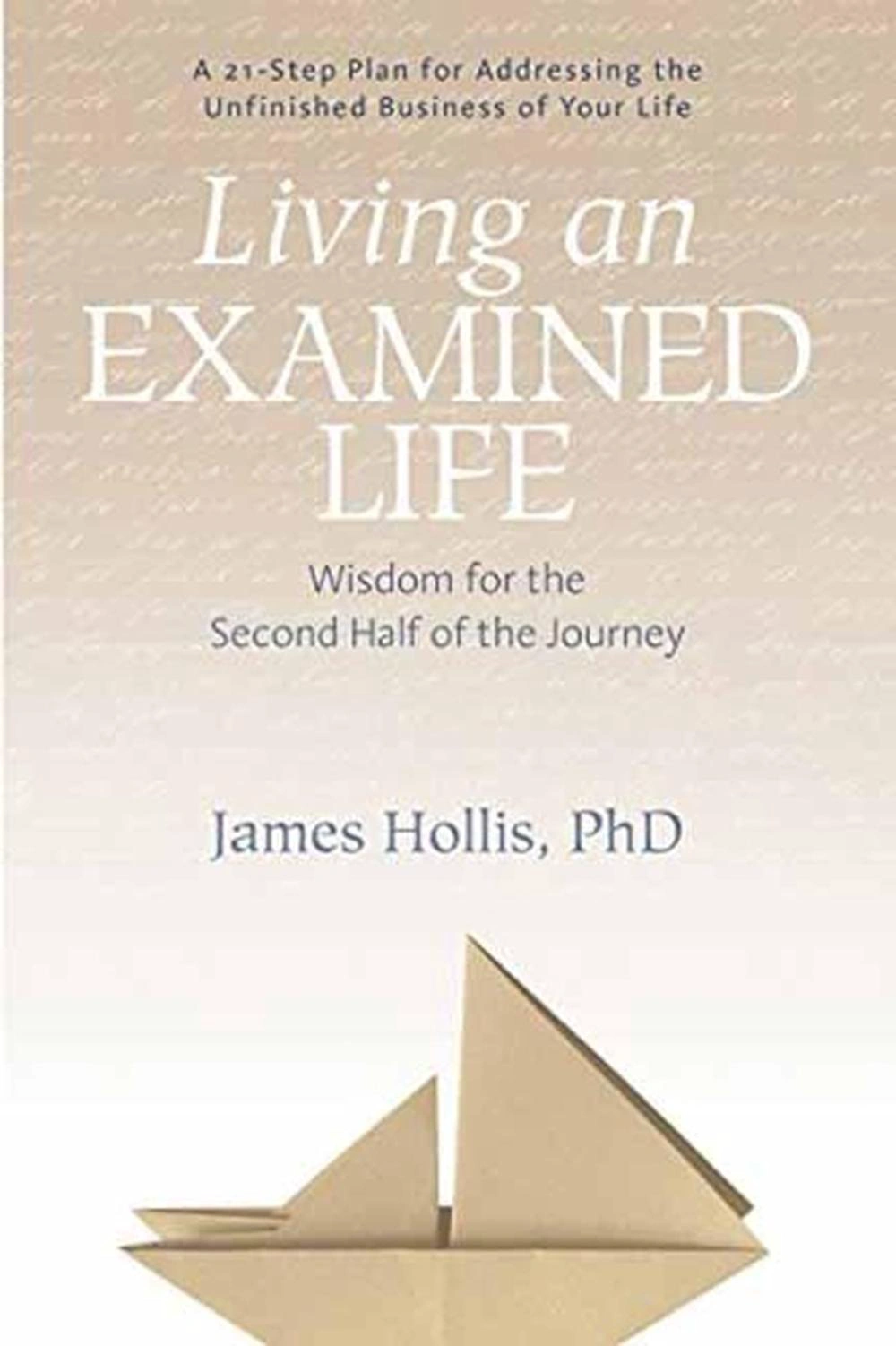
 …you most likely want surcease of suffering, rapid improvement, and abiding change for the better. If someone tells you the truth – that you will likely be dealing with these issues most of your life, that you will come back to them over and over in new venues, new relationships, new stages of life – you would likely move on quickly. But the truth is the truth, and as Jung pointed out, we seldom solve problems, but we can outgrow them. That is what this book is about, not solutions, but attitudes, behaviours and disciplines that move us towards enlargement, towards enfolding our debilitating history into a journey more productive, more clearly our own.
James Hollis is a Jungian analyst, 85 years old, author of over 20 books, a serious, funny, warm and stern voice of wisdom. If you look up his website, you will see that he also has the loveliest creased, old, kind, lived-in, teddy-bear face. I re-read What Matters Most (2009) and Finding Meaning in the Second Half of Life (2005) every couple of years. This book (2018) provides a useful introduction to his work, presenting ‘complex issues in a finite list of graspable points’. As he writes in the preface, ‘Sometimes we need a list, sometimes to be reminded, and sometimes to be kicked in the butt.’
I wonder if it was the publicity gurus who added A 21-Step Plan for Addressing the Unfinished Business of Your Life to the cover. During my 24 years as a bookseller, I saw so many self-help titles come and go, all of them promising a new you, a better you, a reformed or slim or disciplined or rich or successful you. You paid your money and there, page by page, were the laws, rules, secrets, routines, insights and steps to make it so. Hollis’s ’21-Step Plan’ doesn’t really promise a total renovation or even the good old, much spruiked ‘tool kit’. He simply offers a structure.
Here are 21 areas of your life to reflect upon. Your family? There are chapters called It’s Time to Grow Up, Step Out from Under the Parental Shade and Free Your Children from You. Your past? Let Go of the Old, Seek to Make Amends, See the Old Self-Destructive Patterns and Exorcise the Ghosts of the Past that Bind You. You see the picture. Hollis asks us to ‘live the questions, not the answers.’
If you want a kick in the butt, here it is.
And Hollis has a new book out, too.