
 Robert and I go to fetch the prescription, we buy Eccles cakes because my father likes them and because we all deserve a treat. So we surround David, eating Eccles cakes and drinking coffee and speaking quietly: there’s lamplight, music, the scent of sweet spices; the sound of my mother’s knitting needles, of muted idle conversation and sighing dogs, and briefly my foolish mind interprets these signals as evidence of Christmas, and I am content. There’s no world beyond the bungalow door, no life but this life, no hours but these hours. Death and its duties have become largely unremarkable; though now and then we’re pierced by shock and sorrow. Once, my father – watching Robert moisten his father’s mouth – turns suddenly away and is abruptly choked, and says privately to himself: ‘I can’t believe David is dying. I just can’t believe it.’
David is writer Sarah Perry’s father-in-law. Robert is her husband, his son. After a few weeks of tests and appointments and waiting, David was given a diagnosis of oeosophageal cancer. There was the suggestion, from his medical team, of a stent in his throat so that he could swallow more easily, but in the end David decided he didn’t want to be ‘messed around with’. He would have died in hospital, hooked up to machines and tubes; instead, he got to die, nine days later, at home.
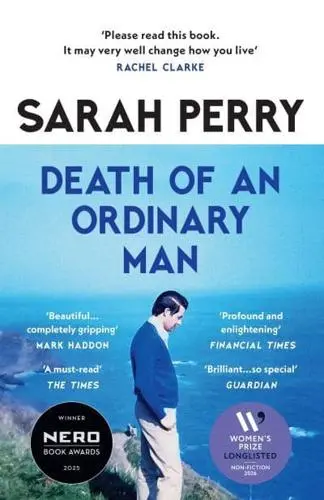
Perry’s account of David’s illness and death, Death of an Ordinary Man, was published a couple of years afterwards. It’s a very moving book – sometimes, almost unbearably so – and beautifully written. I could have chosen other key moments in the text. For instance, her description of the changes in David’s face and body as his body starts to fail are miracles of loving observation. But the process of dying takes in all sorts of ordinary moments, including family eating Eccles cakes and sitting with cups of coffee by the bedside, and that’s part of what I loved about this book.
David was supported and comforted by the love of family, friends and his faith community; most of the carers were sensitive and caring; but there were some tough situations, too. An insensitive doctor, increasing pain, delays with David’s morphine prescription and supply, the NHS bureaucracy, the anxious waiting for carers and nurses to arrive. Often, Perry just did not know what to do. I could see myself in some of her initial fears, but like her I soon realised that the unfamiliar intimacy of caring for a dying person’s body soon seems quite natural.
The title is, I think, a clever one, because all through we are shown the things that make this one man (and by extension, all of us) a unique and irreplaceable self. Death of an Ordinary Man is a small but powerful book, a reminder that death and dying are part of being alive, of being bound in time, and that accompanying someone you love on that journey is both difficult and a privilege.
I have put this on reserve — it sounds like a hard but rewarding read. I just realised that Perry is the author of The Essex Serpent, which I liked a lot.