 …being in Exmoor had connected me to the natural world in a way that I had craved for so long, not because it was the most ‘pure’ or untouched environment I’d ever been in (it wasn’t) – but because it had entered me into the shared experience of nature’s time. This was a time not defined by the orderly simplification of clocks, calendars and work schedules, but a time which flowed out of, and was made by, the shifts and creations of the world itself.
Sharing time in this way, being shaped and changed by it, gave me a vivid sense of the cycles and movements of the earth that were way beyond myself and my control, but that I was still a part of.
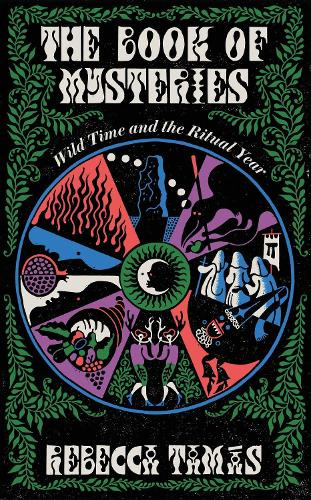
In The Book of Mysteries, award-winning poet Rebecca Tamas has written a memoir about the year in which she marked the ‘cycles and movements of the earth’, and shaped her account around the modern pagan ‘Wheel of the Year’. This wheel, she explains, ‘contains four solar festivals, the equinoxes and solstices, and four cross-quarter festivals, which mark the halfway points between them’; she committed to marking each of the eight seasonal shifts or changes.
Modern pagans, apparently, have combined elements from British and northern European folklore and myth to create a new mixture of ritual, ceremony and celebration – and where better to start than one of the most important Celtic festivals, celebrating ‘the death of summer and the start of winter, a time when the veil between the human world and the world beyond became porous, allowing ancestors and spirits to pass through.‘ It’s called Samhain, and today’s Halloween is a descendant. So Tamas heads off to participate in the Edinburgh Beltane Fire Society’s Samhain ritual.
There’s a huge crowd, with stewards wearing hi-vis keeping everyone safe. A night-time procession, featuring a Summer King and a Winter King (both played by women). Leafy head-dresses, horns, robes, body paint. Fiery torches and spinning torques, drumming, dancing and at the centre of it all, a whirling sword fight between the Summer King and the Winter King (both played by women on this occasion – so it’s very modern paganism in Scotland). The ritual figure of the Cailleach, ‘a figure of Celtic mythology, a divine hag and ancestor of her people’ watches over the fight and makes sure it’s fair. Tamas writes that watching ‘myth come alive in this way, through the actions and movements of the performers, felt potent. Here seasonal change became embodied and visible, the crowd engaged in a collective witnessing of the coming of the darkness…’.