 The silence is intense. Yet even in the absence of voices or sound, Ding Village lives on. Choked by death, it will not die. In the silent shades of autumn, the village has withered, along with its people. They shrink and wither in tandem with the days, like corpses buried underground.
The grass upon the plain has turned brittle and dry. The trees are all bare; the crops have withered. The villagers are shrunken inside their homes, never to emerge again.
Ever since the blood came. Ever since the blood ran red.
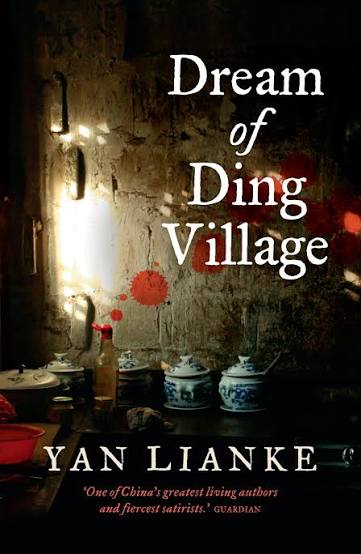
Dream of Ding Village by Chinese writer Yan Lianke was our most recent book club novel. Here’s the story for you: imagine there’s a lucrative international market for blood products, and China is cashing in. Government officials are visiting rural villages to encourage the inhabitants to sell their blood but the people of remote, backward, impoverished Ding Village aren’t keen…until a group of them are bused to neighbouring village to see for what’s in it for them. Concrete floors! Tiled roofs! Whitegoods! Just a little bit of blood…and after all, in the words of the government official, ‘blood is a natural spring that never runs dry’, so …why not?
Soon Ding Village is also benefiting from the plasma boom. One ambitious man, Ding Hui, sees a business opportunity. He persuades the gullible and ignorant villagers to sell their blood to him, and to sell more, more often. Instead of the villagers having to go to the blood collection centre, he goes to them, to their homes or even to the fields where they’re working, peddling round the district on his bike loaded with bottles, tubes and needles. As a middleman, a ‘blood head’, soon he’s rich.
But as time goes on, the villagers begin to get sick with an illness they call ‘the fever’. They start dying. And the government officials arrive to explain that these people have contracted an incurable disease from reused needles and cotton swabs. It’s called HIV.
The story is narrated by a dead 12-year-old boy poisoned by one of them to punish his father Ding Hui, the ‘blood head’ responsible introducing the disease to Ding Village. But defiant and undeterred by the consequences of his greed, Ding Hui manages to keep on making money, only now he’s dealing in coffins and arranging marriages for dead people so they won’t be alone in the afterlife. The young ghost keeps watch over the fate of his home village, following the fortunes of his father, his beloved Grandpa Ding, his relatives and neighbours as they live or die in this this appalling, tragic time. He sees the people of Ding Village at their best – especially indefatigable and caring Grandpa Ding – but more often the worst prevails.
The wine-and-cheese book group is a very convivial evening. Of course it is! There’s wine, and cheese. Also cake – always cake – and often the actual book is a side issue for a little light literary conversation. But oh, not so with Dream of Ding Village. ‘Harrowing’ and ‘disturbing’ come to mind, as well as grotesque, bizarre and fantastical. Sadly, it’s not a dystopian satire but is based on real events in Henan Province in the 1990’s when greed and recklessness were a perfect match for widespread corruption at many levels and whole villages were emptied of life by the AIDS epidemic.
It seems strange to say it was ‘a good read’ but it elicited one of the best discussions we’ve had. Including the question of how the author ever managed to get the book published in the first place.